
Pool automation has moved from luxury add-on to near-standard equipment for new Arizona pool builds. What used to require walking outside to the equipment pad to flip switches — starting the pump, turning on lights, adjusting the heater, cycling water features — is now controlled from a smartphone app, voice assistant, or wall-mounted touchscreen. For Arizona pool owners specifically, automation delivers real value: it enables variable-speed pumps to run efficiently, schedules pump operation around utility time-of-use rates, coordinates heater with weather forecasts, and provides remote monitoring so out-of-town homeowners can respond to problems before they escalate. This 2026 guide compares the three dominant pool automation platforms (Pentair IntelliCenter, Hayward OmniLogic, and Jandy iAquaLink), covers cost expectations for new builds and retrofits, quantifies energy savings, and walks through what to look for when specifying automation with your pool builder.
- Three dominant brands: Pentair IntelliCenter, Hayward OmniLogic, Jandy iAquaLink
- New-build automation package cost: $2,000–$5,000 depending on features
- Retrofit (existing pool) cost: $2,800–$6,500 — 40–60% more than new-build install
- Energy savings with variable-speed pump + automation: 30–70% on pump operation per US DOE
- All three brands support smartphone apps, voice control (Alexa/Google), scheduling, alerts
- Best match usually matches your existing equipment brand — Pentair pump = Pentair controller
What Pool Automation Actually Does
A pool automation controller is a small computer at the equipment pad that connects to your pool’s pump, heater, salt chlorine generator, valves, lights, water features, and sensors. It gives you unified control of all these systems from three interfaces:
- Wall-mounted touchscreen (indoor or protected outdoor location)
- Smartphone app (iOS + Android) — usually free with the controller purchase
- Voice assistant — Alexa, Google Assistant integration standard on all three major brands
What you can do with it:
- Schedule pump run-time by day, season, or time-of-use utility rate window
- Turn on/off pool lights remotely (green party lighting? white cleaning lighting? scheduled sunset activation?)
- Start heater 4 hours before you get home from work so pool is warm on arrival
- Cycle water features (sheer descents, bubblers, spillovers) on/off from the app
- Switch pool circulation to spa mode remotely
- Monitor chemistry (with add-on sensors), water level, and equipment status
- Receive alerts on equipment issues, high pressure, low water level
- Track chlorine cell output for salt-water pools
- Voice-command basic functions (“Alexa, turn on pool lights”)
The Three Dominant Automation Platforms
Nearly every Arizona pool build uses one of these three brands. Best choice usually comes down to matching your existing (or planned) pump and heater brand — mixing brands works but usually costs more and complicates support.
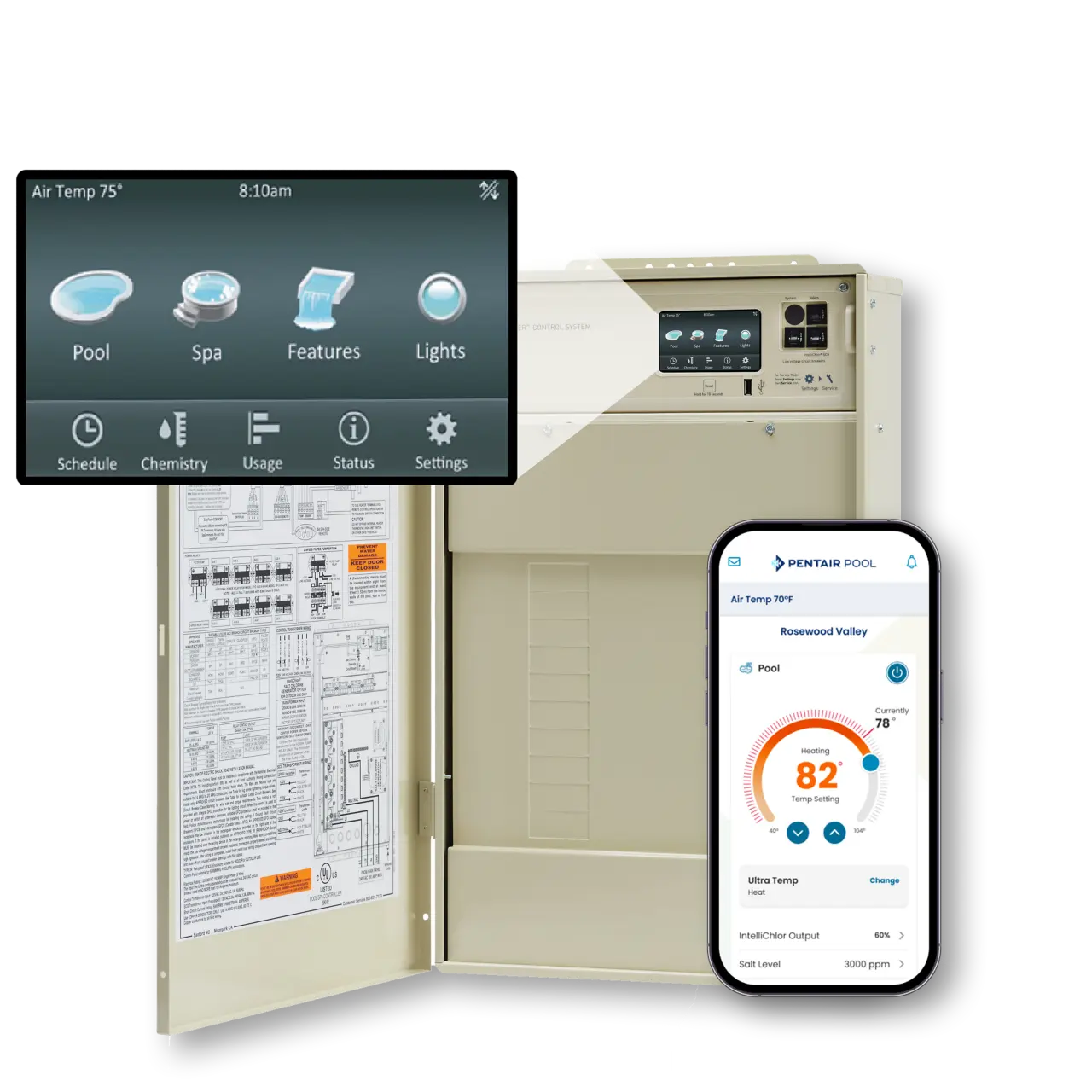
Pentair IntelliCenter
Pentair IntelliCenter is generally regarded as the most feature-complete platform. Deep integration with Pentair’s IntelliFlo variable-speed pumps and MasterTemp heaters is the primary advantage. Supports up to 40+ auxiliary connections (lights, features, valves, cleaner circuits). Best if your pool equipment is Pentair; forces some workarounds if you have mixed brands.
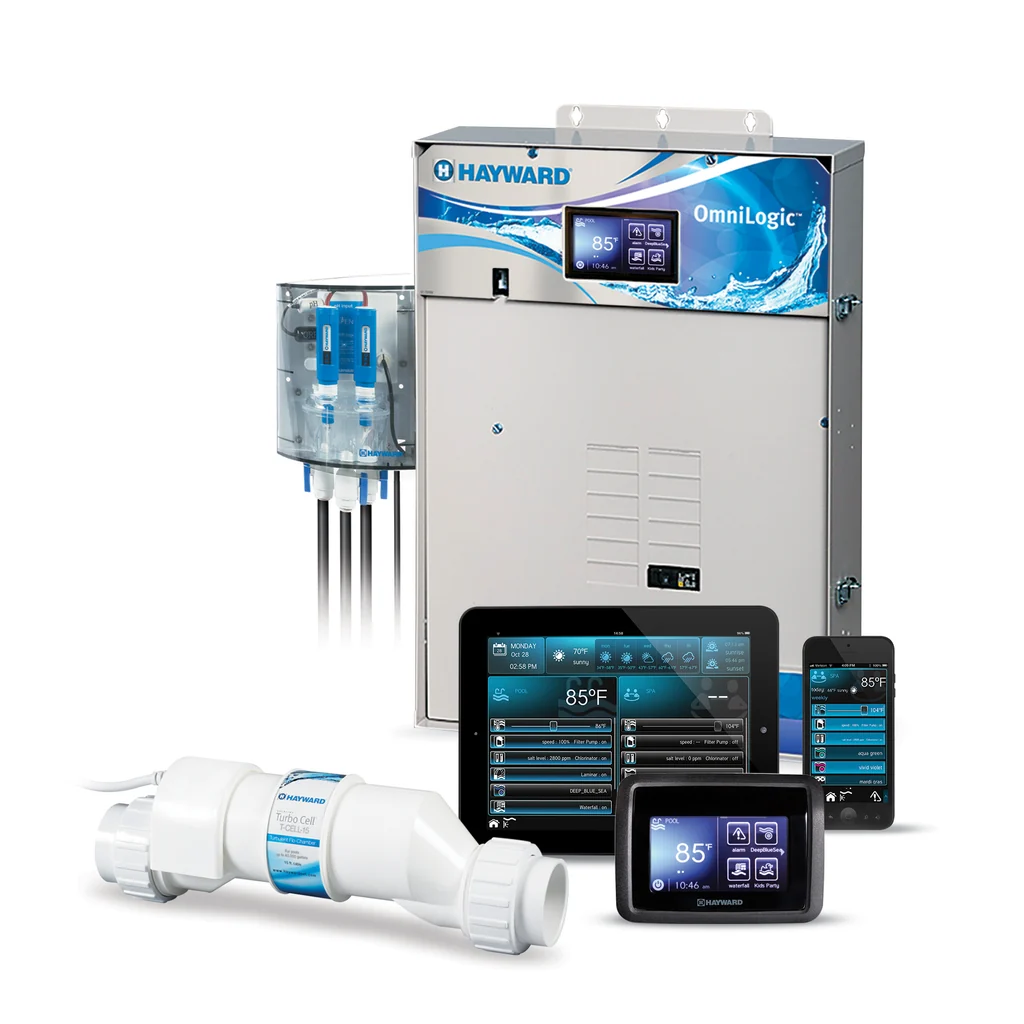
Hayward OmniLogic
Hayward OmniLogic is the most user-friendly interface of the three, with a clean smartphone app and touchscreen. Excellent integration with Hayward’s variable-speed pumps and heaters. Slightly fewer auxiliary connections than IntelliCenter but sufficient for 95% of residential pools. Best value in the mid-tier feature range.
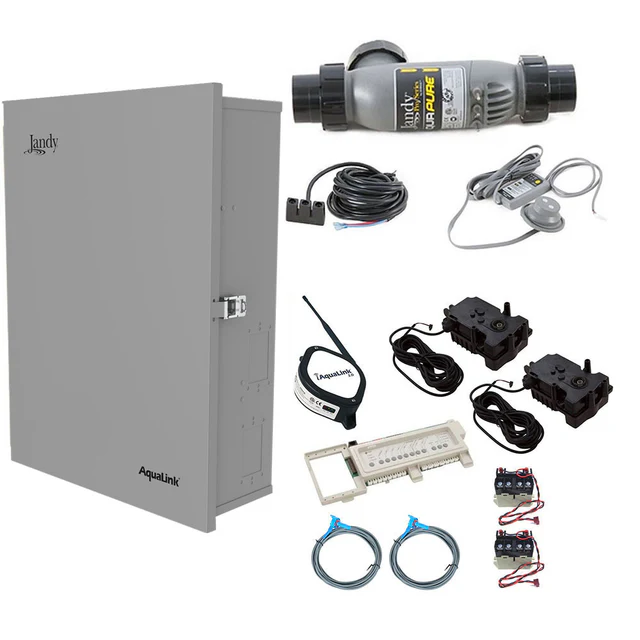
Jandy iAquaLink
Jandy iAquaLink pairs deeply with Jandy’s Pro Series variable-speed pumps and heaters. The iAquaLink app is polished and reliable. Preferred by many Arizona pool builders for pool + spa combos due to strong spa-side integration. Slightly less popular than Pentair or Hayward but delivers strong value where the equipment matches.
| Platform | New-Build Cost | Best For |
|---|---|---|
| Pentair IntelliCenter | $2,500–$5,000 | Feature-heavy setups; multiple water features + spa; existing Pentair equipment |
| Hayward OmniLogic | $2,200–$4,500 | Best user experience; simple setup with 5–15 aux circuits; existing Hayward equipment |
| Jandy iAquaLink | $2,000–$4,200 | Pool + spa combos; existing Jandy equipment; value-conscious buyers |
Energy Savings — The Actual Math
Automation’s biggest financial benefit isn’t remote control — it’s enabling variable-speed pump operation at optimal RPM. Traditional single-speed pumps run at one high RPM (typically 3,450 RPM) drawing 1.5–2.5 kW continuously. Variable-speed pumps controlled by an automation system can run at 1,000–1,500 RPM for filtration (drawing 200–500 watts) and briefly spike to high RPM only when needed for pool cleaner operation or spa jets.
According to the US Department of Energy, variable-speed pumps can reduce pump energy consumption by 30–70% compared to single-speed pumps. Real-world Arizona homeowner savings:
| Pump Configuration | Monthly Cost (APS/SRP Rates) | Annual Cost |
|---|---|---|
| Single-speed, 8 hrs/day summer | $85–$140 | $650–$1,050 |
| Variable-speed at 3,450 RPM (like single) | $70–$115 | $530–$860 |
| Variable-speed at 1,500 RPM w/ automation | $25–$45 | $180–$340 |
| Annual savings vs single-speed | $470–$710/year typical | |
At $500–$700/year in savings, a $3,500 automation + variable-speed pump investment typically pays back in 5–7 years — well within the equipment’s expected lifespan (10–15 years). The ENERGY STAR certified pool pumps program lists specific models qualifying for the highest efficiency tier.
SRP and APS also periodically offer rebates on ENERGY STAR variable-speed pumps for Arizona customers — check current programs at your utility’s website.
New Build vs Retrofit
Adding automation during initial pool construction is significantly cheaper than retrofitting later:
New-build automation ($2,000–$5,000)
- Wiring runs installed during initial rough-in
- Equipment pad sized for controller from the start
- Pump + heater + salt cell specified as automation-ready
- Single crew handles install; no incremental labor
- Full manufacturer warranty on unified system
Retrofit ($2,800–$6,500)
- Existing wiring often insufficient; new conduit runs needed
- Existing pump may need replacement for variable-speed
- Existing heater may need control board upgrade
- Two separate service visits typical (wiring + programming)
- Additional trip charges and troubleshooting labor
If you’re planning a new pool build, add automation to your specification up front. If you have an older Arizona pool without automation, retrofit is still worthwhile — the energy savings alone typically recover the retrofit cost within 6–9 years even at the higher install expense.
What to Look For When Specifying Automation
1. Auxiliary count matches your needs
Every controller supports a fixed number of “auxiliary” circuits — separate switched circuits for lights, water features, cleaner pumps, valves. Count what you need: pool light (1), spa light (1 if separate), water feature (1 per feature), cleaner (1), valve actuators (1 per valve position). A typical Arizona pool with attached spa and one water feature uses 5–8 aux circuits. Buy a controller with 30–50% headroom for future expansion.
2. Variable-speed pump compatibility
The pump is the biggest energy consumer. Make sure your automation controller supports the specific variable-speed pump model you’re installing — same brand match is easiest. Cross-brand support usually works but sometimes limits feature access (e.g., you can turn the pump on/off but not fully adjust RPM curves).
3. Salt cell integration (if applicable)
If you have a salt-water pool, the automation controller should integrate with your specific salt chlorine generator to display cell output percentage, cell wear indicator, and enable remote output adjustment. Cross-brand salt systems usually work but with reduced monitoring.
4. Wireless connectivity requirements
The controller connects to your home Wi-Fi (or increasingly cellular for standalone operation). Make sure your equipment pad has adequate Wi-Fi signal — Arizona pool equipment pads are often at the far end of the yard where Wi-Fi may drop. A Wi-Fi extender or cellular gateway may be needed. Ask your builder to verify signal strength during install.
5. Voice assistant compatibility
All three major brands now support Alexa and Google Assistant. If Apple HomeKit is important to you, verify specific model support — coverage is thinner than Alexa/Google.
6. Future expandability
Consider what you might add later: pool cover automation, chemistry monitoring sensors, additional water features. Choosing a controller with 30–50% capacity headroom means you can add features without a full controller replacement.
Get a Free Pool Automation Estimate
Our online calculator lets you spec new pool builds and retrofits with automation options — see real Phoenix-metro pricing in minutes with no in-person sales visit required.
Start My Free EstimateFrequently Asked Questions
Arizona Pool Builders is ROC #344023 — licensed for both residential and commercial pool construction with a KA-5 designation and in good standing with the Arizona Registrar of Contractors. Costs, energy-savings figures, and equipment recommendations reflect typical Phoenix-metro conditions and utility rate structures as of 2026 and vary with pool size, existing equipment, and household usage patterns.
